
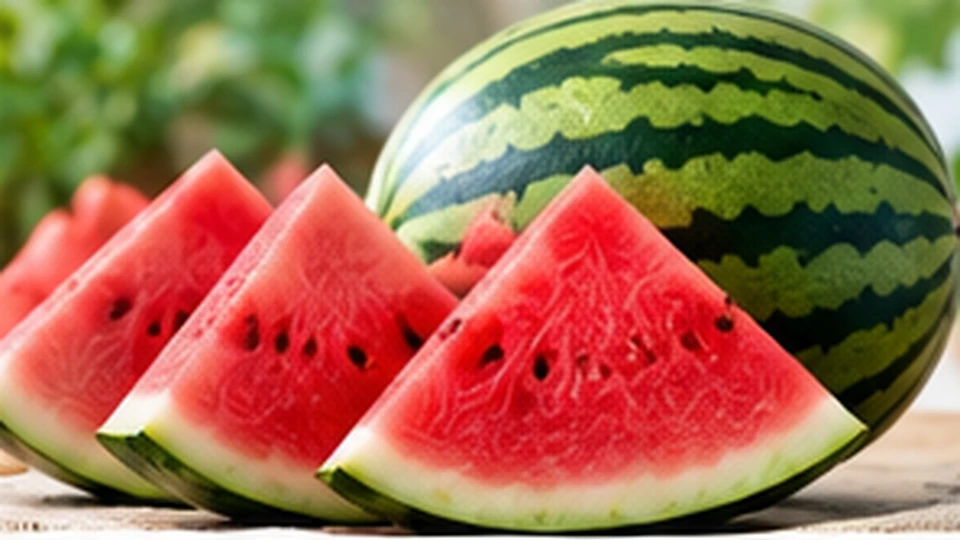
Watermelon is made up mostly of water, making it refreshing in hot weather. It provides carbohydrate, vitamin C, carotenoids including lycopene, and small amounts of potassium and other nutrients.
Nutrition and key nutrients
| Nutrient or feature | Why it matters |
|---|---|
| Water | Makes watermelon highly hydrating by weight. |
| Vitamin C | Supports collagen formation and antioxidant defences. |
| Lycopene | A red carotenoid with antioxidant activity. |
| Citrulline | An amino-acid-related compound found in watermelon. |
| Potassium | Contributes to normal muscle and nerve function. |
Health benefits
- High water content can contribute to hydration.
- Watermelon is relatively low in energy density compared with many processed snacks.
- Lycopene contributes antioxidant activity and gives red watermelon its colour.
- Citrulline is involved in nitric-oxide metabolism and is being studied for vascular effects.
- Watermelon can add fruit variety for adults and children.
Possible side effects and precautions
- Large portions can provide a significant carbohydrate load despite the fruit's high water content.
- Some people experience bloating after very large servings.
- Pre-cut watermelon should be refrigerated promptly and handled hygienically to reduce foodborne illness risk.
Bottom line
Fruit can contribute vitamins, minerals, fibre, water and protective plant compounds to a balanced diet. Variety matters: different fruits provide different nutrients, and whole fruit is usually a better everyday choice than sweetened fruit drinks.