
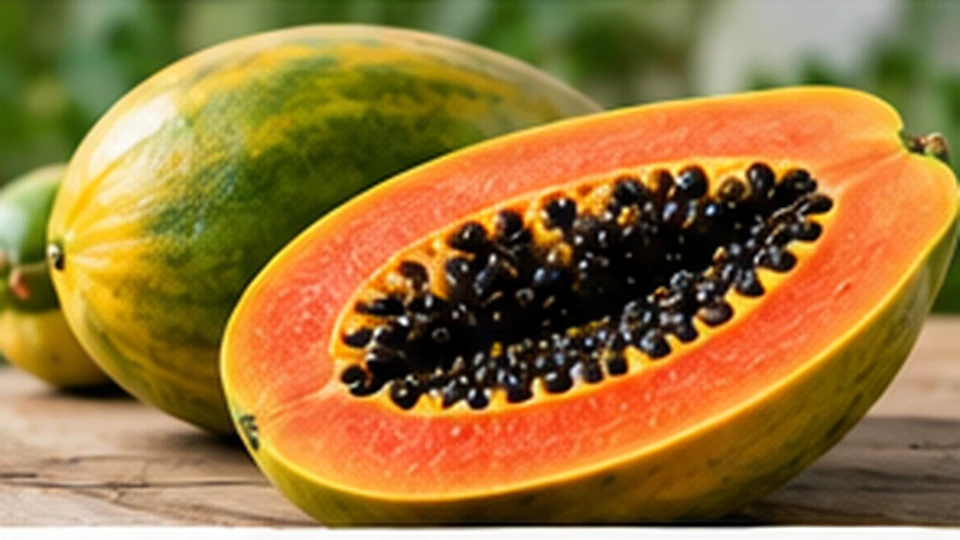
Pawpaw, also called papaya, is common in many tropical regions and has soft orange flesh. It provides vitamin C, carotenoids, folate, fibre and water.
Nutrition and key nutrients
| Nutrient or feature | Why it matters |
|---|---|
| Vitamin C | Supports immune function and collagen production. |
| Carotenoids | Includes beta-carotene and other antioxidant pigments. |
| Folate | Supports normal cell division. |
| Fibre | Supports bowel regularity. |
| Papain | A protein-digesting enzyme present in papaya. |
Health benefits
- Fibre and water can support normal bowel movements.
- Vitamin C contributes to immune and connective-tissue function.
- Carotenoids support vitamin A nutrition and antioxidant activity.
- The soft texture makes ripe pawpaw easy to eat for many age groups.
- Pawpaw can add variety to breakfast, snacks and mixed fruit meals.
Possible side effects and precautions
- Unripe papaya and concentrated papaya products are different from ripe fruit and should not be treated as equivalent.
- People with latex allergy may sometimes react to papaya.
- Large portions can cause loose stools in some people because of fibre and natural sugars.
Bottom line
Fruit can contribute vitamins, minerals, fibre, water and protective plant compounds to a balanced diet. Variety matters: different fruits provide different nutrients, and whole fruit is usually a better everyday choice than sweetened fruit drinks.