
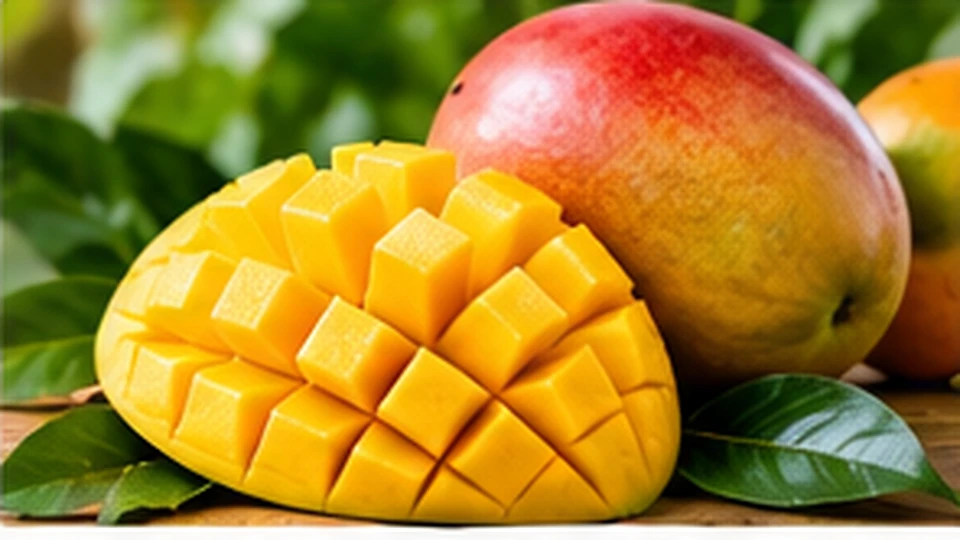
Mangoes are nutrient-dense tropical fruits with a sweet flavour. They provide vitamin C, carotenoids that contribute to vitamin A activity, folate, fibre and water.
Nutrition and key nutrients
| Nutrient or feature | Why it matters |
|---|---|
| Vitamin C | Supports collagen, antioxidant defences and iron absorption. |
| Beta-carotene | Can be converted to vitamin A in the body. |
| Folate | Supports cell division and blood formation. |
| Fibre | Supports digestion and fullness. |
| Polyphenols | Plant compounds with antioxidant properties. |
Health benefits
- Vitamin C and carotenoids contribute to normal skin and immune functions.
- Fibre can support bowel regularity.
- Mango can add micronutrients and colour to meals without requiring added sugar.
- Carotenoids contribute to vitamin A intake, important for normal vision and immune function.
- Polyphenols add antioxidant diversity to the diet.
Possible side effects and precautions
- Ripe mango is naturally sweet, so portion size matters for people monitoring carbohydrate intake.
- Mango skin and sap can irritate sensitive skin in some people, especially those who react to related plants.
- Dried mango is more concentrated in sugar and energy than fresh mango, especially if sweetened.
Bottom line
Fruit can contribute vitamins, minerals, fibre, water and protective plant compounds to a balanced diet. Variety matters: different fruits provide different nutrients, and whole fruit is usually a better everyday choice than sweetened fruit drinks.