
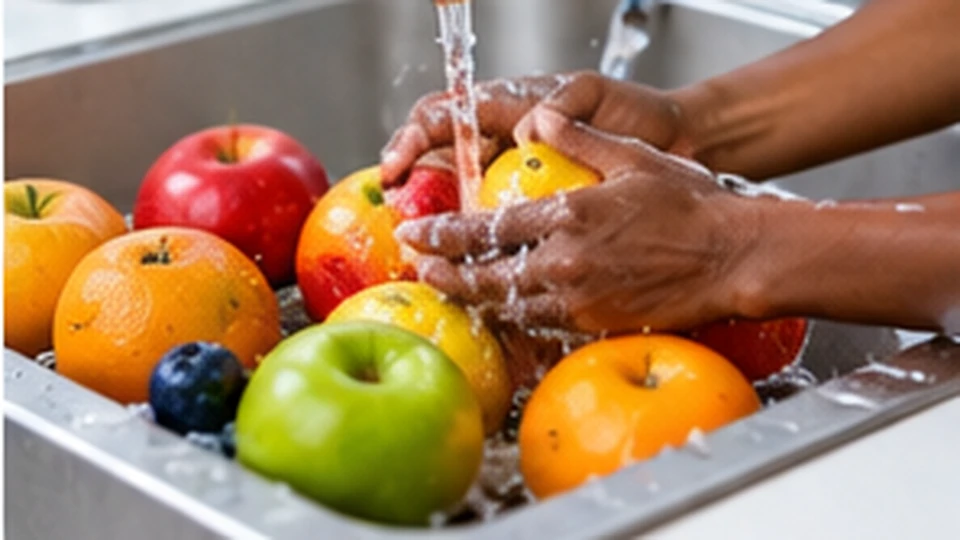
Fruit can become contaminated during growing, transport, handling or storage. Good hygiene reduces risk, especially for fruit eaten raw and for cut fruit that will not be cooked before eating.
Nutrition and key nutrients
| Nutrient or feature | Why it matters |
|---|---|
| Clean running water | Useful for rinsing whole fruit before eating or cutting. |
| Clean hands | Reduce transfer of germs during preparation. |
| Clean utensils | Knives and boards can transfer contamination. |
| Cold storage | Slows growth of many microorganisms in cut fruit. |
| Separation | Keeps raw meat juices away from ready-to-eat fruit. |
Health benefits
- Wash hands before preparing fruit.
- Rinse whole fruit under clean running water, including fruit that will be peeled, because cutting can transfer surface contamination to the flesh.
- Dry fruit with a clean towel where appropriate.
- Refrigerate cut fruit promptly.
- Use clean knives and chopping boards.
- Discard fruit with obvious mould, severe spoilage or unpleasant odour.
Possible side effects and precautions
- Household soap, bleach and detergents are not meant to be eaten and should not be used as routine fruit washes.
- Cut melon is especially perishable and should be kept refrigerated.
- Do not leave prepared fruit at room temperature for long periods.
- People with weakened immunity should be especially careful with food hygiene.
Bottom line
Fruit can contribute vitamins, minerals, fibre, water and protective plant compounds to a balanced diet. Variety matters: different fruits provide different nutrients, and whole fruit is usually a better everyday choice than sweetened fruit drinks.